
Reverse Logistics and Repair, Built for Device Rental and Subscription Companies
You’re not selling the device. You’re renting its uptime.
Your repair-and-return loop decides how much each device earns.
The overview
In device rental and subscription, every unit that comes back for service is a revenue-producing asset that has stopped earning. It isn’t a cost to recover and forget, it’s income sitting on a shelf until it’s back in the field. PanurgyOEM runs that entire loop for you: complete Dock-to-Stock reverse logistics and repair, under one roof, at a 4-day average turnaround, so a higher percentage of your fleet stays deployed and earning.
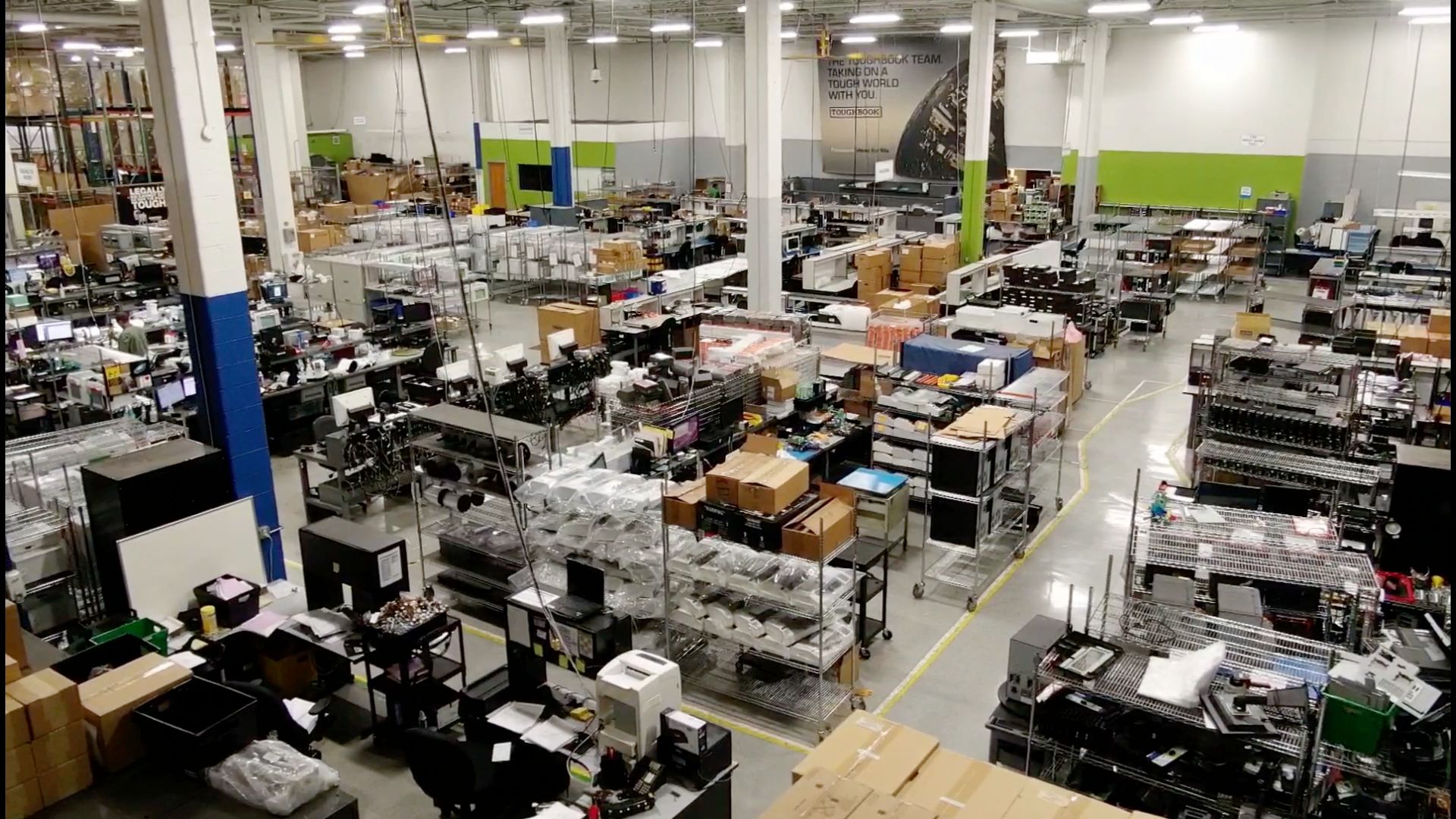
45,000 repairs in a single month · 4-day average Dock-to-Stock · 90,000 sq ft US facility · 40+ years
Your fleet is only as big as your repair loop
The business is simple to describe and hard to run: put mission-critical devices in the field, keep them working, and if one fails, get a working unit back fast. When a unit comes back, it isn’t just a repair cost. It’s an asset that stopped earning, and slow reverse logistics rarely shows up as one big loss. It shows up quietly, as a fleet that costs more than it should to keep running.
The hot-swap trap. Most operators cover a slow repair cycle by buying new units to swap in. It keeps customers happy, so it feels like a fix. It isn’t. You pay twice: once for the spare, and again for the dead unit still sitting on the shelf. New devices should fund growth, not paper over a slow loop.
What a missed SLA really costs. The uptime and turnaround commitments in your contracts are probably part of what won you the deal. A missed SLA rarely blows up in the moment. Your customer logs it, and it sits. Then it resurfaces at renewal, when the contract you fought for is back up for debate.
What a real Dock-to-Stock loop looks like
We own the full return-and-repair lifecycle under a single roof, so units don’t bounce between vendors and warehouses losing time at every handoff:
- Returns receipt with near-real-time status on every unit
- Diagnosis
- Data wipe and the correct software build reflashed per customer
- Component-level repair, not just board swaps
- QC and battery testing
- Kitting and packaging
- Shipment back to the field
- Warehousing for later order fulfillment
- Integration with your eCommerce or shipping systems
- Visibility: device status, repair trends, failure analytics
One facility means no double-touch handoffs. Cross-trained staff means the loop scales with demand spikes without you paying for idle capacity.
A repair loop that hit a wall
A large device rental and subscription operation came to us running all repairs in-house. Volume had outgrown the operation: pallets of returned units sitting unattended, thousands of devices with no timeline back to service, SLAs slipping, and budget bleeding into new units bought just to cover the gap.
The hardest part wasn’t the wrench work. This operator had over 1,000 customers, each requiring its own unique software build. Every returned unit needed a full data wipe and client-specific reimaging before it could ship, and getting that right at scale is exactly where in-house repair broke down. We built a methodology around it: intake with live status, diagnosis, wipe, correct software stack flashed for the right customer, component-level repair, QC, and shipment to the specific client site, all inside a 4-day turnaround.
Component-level repair recovered units a swap-only shop would have scrapped. And an unplanned bonus: the repair-trend and failure data we captured flowed back to their engineering team and drove real design improvements.
What a better loop does to your numbers
- Faster turnaround means fewer missed SLAs, which protects renewals
- Component-level repair extends device life, so each unit earns longer and fewer get scrapped
- Fewer hot-swap purchases means CapEx goes to growth, not coverage
- Verified data wipe plus correct reimaging means devices ship deploy-ready, cutting support tickets and compliance risk before they happen
- A predictable per-unit cost replaces fixed repair overhead and unpredictable bench pricing
Where we fit, and the devices we serve
A strong fit if you:
- Run high repair volumes with SLAs that demand days, not weeks
- Face demand that’s hard to staff for internally
- Are questioning whether in-house repair still makes financial sense
- Want a single owner accountable for the full return lifecycle
- Need a US-based operation for service, compliance, or market entry
Probably not a fit if: returns are rare, you need one-off lowest-per-unit spot repair, you want to keep every operational detail in-house, or you only need a traditional 3PL.
We do this for corporate laptop and IT fleets, point-of-sale systems, digital signage, kiosks, tablets and monitors, and specialized or rugged hardware.
How we compare
- In-house repair teams struggle with fixed cost, staffing elasticity, and demand volatility. The per-unit math looks cheaper until you add CapEx, tooling, training, and idle capacity.
- Regional or independent repair networks introduce inconsistent service and a fragmented customer experience, the classic 4-day-versus-4-week gap.
- Traditional 3PLs handle logistics but lack deep repair, refurbishment, and failure-analysis capability.
Our difference is owning outcomes, not just executing tasks.
Frequently Asked Questions About Device Rental & Subscription Reverse Logistics
How does repair turnaround affect customer satisfaction and renewals?
Devices back in service quickly means fewer missed SLAs and fewer frustrated end users. Turnaround speed is a direct driver of retention, and it’s what gets scrutinized at renewal.
How can quality repairs reduce new-device spend?
Every device fixed right the first time, fast, is a device you don’t replace out of budget. Quality repairs directly cut new-unit purchases.
How does keeping devices in service longer affect revenue?
More of your fleet stays in play, earning in the field instead of sitting broken on a pallet. Reliable repairs extend each device’s earning life and its revenue per unit.
How do you handle unique software builds and reimaging across many customers?
This is core to what we do. We wipe every returned device and flash the correct, client-specific software build before it ships, so units arrive deploy-ready even when you have hundreds of customers each running a different stack.
How does board-level repair reduce scrap and replacement cost?
Component-level repair recovers units a swap-only vendor would write off, lowering replacement cost and cutting e-waste at the same time.
Can a repair partner absorb seasonal spikes and bad-batch events?
Yes. Cross-trained staff and quick build-out methods absorb seasonal volume or a defect event without forcing you to over-hire or fall behind.
Your repair loop is a revenue decision
In device rental and leasing, your repair-and-return loop is what decides whether a device earns for years or sits on a shelf losing value. If repair turnaround is what stands between your devices and the revenue they’re supposed to generate, that’s worth a conversation.
PanurgyOEM
701 Ford Road
Rockaway, NJ 07866
973-625-4056